A commercial site plan is one of the most important permit drawings required when starting, expanding, or remodeling a business property in the USA. Whether you are opening a restaurant, building a warehouse, creating a retail shop, planning a new parking layout, or renovating an existing commercial space, the city will require a clear and accurate site plan. Many business owners feel overwhelmed because commercial permits involve more zoning rules, safety requirements, and review steps than simple residential permits. Understanding how to get a site plan for permit approval helps reduce stress and allows you to move through the review process with confidence.
This guide explains everything you need to know about preparing a commercial site plan USA. The information is written in simple and clear wording so new business owners and first-time applicants can understand each step. You will learn what a commercial site plan includes, how to collect information, how to meet zoning requirements, and how online drafting services can prepare a permit ready site plan for you. By the end, you will know exactly how to move forward and avoid common delays.
What a Commercial Site Plan Is and Why It Matters
A commercial site plan is a scaled drawing that shows the complete layout of a commercial property. It includes the main building footprint, parking layout, entrances, driveways, walkways, accessibility routes, utility locations, drainage, landscaping, fire access, loading zones, refuse areas, and any new structures you plan to add. The purpose of the site plan is to confirm that your business layout follows zoning standards and public safety rules. Commercial projects affect customers, employees, deliveries, emergency access, and traffic flow. Cities want to ensure that each business property has safe access, enough parking, proper drainage, fire lanes, and accessible walkways. A complete site plan helps permit reviewers understand whether your business layout is compliant and safe for public use.
If you want to learn more about zoning basics, you can explore helpful articles on the blog.
Typical Reasons Your Business Needs a Commercial Site Plan
A business may need a commercial site plan for a wide range of reasons. You may be opening a new location, expanding an existing structure, adding outdoor seating, updating a warehouse layout, installing new equipment, or changing the use of a building. Cities often require a site plan for remodels, tenant improvements, parking updates, driveway modifications, restaurant seating plans, retail layout changes, and signage installations. Every project that affects the site layout, customer flow, parking, utilities, or safety requires review, and the site plan helps the city understand your changes clearly.
Basic Elements Required in a Commercial Site Plan
Commercial site plans require more detail than residential plans. The city checks every essential element before approving a permit, and missing information can cause delays. A complete plan includes the lot boundaries, building footprint, parking layout with counts and measurements, accessible parking, walkways, entrances, driveways, fire lanes, emergency access, loading zones, trash placement, utility lines, drainage information, landscaping areas, lighting placement, and any proposed improvements. These elements allow the reviewer to evaluate your site accurately and confirm that the project meets zoning and safety rules. For additional clarity on what cities expect, you can review the questions page.
Understanding Commercial Zoning Requirements
Commercial zoning rules vary from one city to another. Some zones require a minimum number of parking spaces for specific business types. Others enforce landscaping buffers, fire lane spacing, drainage requirements, accessibility routes, setbacks, or limits on building height. If your business includes outdoor seating, public gathering areas, equipment storage, or retail displays, additional requirements may apply. When your site plan aligns with zoning rules, the approval process becomes easier and faster.
How to Gather Information Before Starting Your Commercial Site Plan
Gathering the correct information is the first step in preparing a commercial site plan for permit approval. You should collect the property address, any older drawings, past permit documents, parcel information from the county, and basic measurements of the building or parking area. Many business owners also review county GIS maps and zoning maps to understand lot dimensions and zoning classifications. Satellite imagery helps identify the shape of the building and surrounding features. Providing accurate information helps the drafting team prepare a site plan USA that meets the city’s requirements.
Preparing a Commercial Site Plan Without a Survey
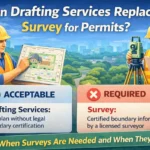
Many commercial site plans in the USA do not require a certified land survey. Cities often accept plans created using GIS mapping, satellite imagery, county parcel records, and owner-provided measurements, especially for interior modifications, parking updates, seating plans, and small exterior changes. However, large construction projects or major commercial expansions may require a certified survey. This depends on the zoning category, property size, and the accuracy needed by the city.
How Online Services Create Commercial Site Plans
Online drafting services make it easier for business owners to get a permit ready commercial site plan without hiring an architect or engineer. Competitor platforms such as MySitePlan, GetASitePlan, 24HPlans, and ProSitePlans use GIS data and aerial imagery to prepare accurate plans quickly. This method speeds up the drafting process and lowers the cost for business owners. At SitePlans Online USA, we follow the same efficient process while focusing on zoning accuracy, clean scaling, and clear layouts. You can view available site plan packages and select the one that matches your project.
Types of Commercial Site Plans You May Need
The type of commercial site plan you need depends on your project. Some plans cover small improvements such as outdoor seating or parking changes. Others include full layout details for new construction, commercial expansions, or complex remodels. Basic plans show the building footprint, lot outline, and parking. Mid-level plans display utilities, landscaping, fire lanes, and accessibility paths. More detailed plans include drainage information, lighting placement, loading docks, refuse placement, and turning radius diagrams. If you need help choosing the correct level, you can explore the drafting services page.
How to Draw a Simple Commercial Site Plan Yourself
Some business owners prepare their own simple site plan for permit review. This is possible if your city allows hand drawn or basic digital drawings. Preparing a plan yourself requires the correct scale, accurate dimensions, and clear labeling of all elements. You must draw the property boundary, outline the building, add parking measurements, driveways, walkways, utilities, and any new construction details. Commercial permit review teams check measurements carefully, so accuracy is critical. Most business owners choose a professionally drafted plan to avoid revisions and delays.
Accessibility, Parking, and Safety Requirements in Commercial Plans
Commercial properties must meet local and federal accessibility rules and safety standards. The site plan must show accessible parking in the correct location, proper sidewalk connections, safe pedestrian routes, and fire lanes with required widths and turning space for emergency vehicles. If your business includes outdoor dining, customer seating, waiting areas, or display areas, these must be shown clearly on the plan. Parking counts must match zoning requirements based on your business type. Accurate safety and accessibility details increase the chances of smooth approval.
Submitting a Commercial Site Plan for Permit Review
After your site plan is prepared, you must submit it to your city or county for permit review. Many cities now accept digital PDF submissions through online portals. You will fill out the application form, upload the plan, and pay the review fee. The reviewer checks your plan against zoning rules, safety standards, and building codes. If changes are required, you update the plan and resubmit it. Most commercial permits go through one or two review cycles, which is normal. When you work with a drafting service that provides revisions, the resubmission process becomes easier and faster.
Avoiding Common Mistakes in Commercial Site Plans
The most common delays occur when important details are missing from the plan. These include missing accessible parking, incomplete parking measurements, missing fire lanes, inaccurate building dimensions, unclear drainage layouts, or missing landscaping areas. Incorrect scaling or unclear labels also cause rejections. Preparing a complete and accurate site plan helps avoid unnecessary delays. If you need support or guidance, you can contact our team.
Conclusion
Getting a commercial site plan for business permits in the USA becomes much easier when you understand what the city expects and how the process works. A commercial site plan supports zoning approval, safety compliance, accessibility requirements, and overall project planning. A clear and accurate plan shows the reviewing officer how your business will operate on the property. Whether you are planning a remodel, opening a new location, adjusting a parking layout, or completing a large expansion, the process begins with a complete and well prepared site plan. When you start with accurate information and a reliable drafting method, the path to approval becomes much smoother.
Why Choose SitePlans Online USA
We prepare commercial site plans that follow USA building permit requirements and zoning rules. Our team understands the details needed for commercial properties including parking layouts, accessibility routes, fire lanes, loading zones, utilities, landscaping, and drainage. We use accurate GIS data and correct scaling to ensure your plan is accepted by the building department with confidence. Our service is designed for business owners who need fast delivery, clear layouts, and reliable permit ready drawings without the cost of hiring a local architect. You can learn more about our company and read customer feedback. If you want a professional site plan created quickly, you cancontact us to get started.
Frequently Asked Questions
Do all commercial projects need a site plan.
Most commercial projects need a site plan because cities check zoning rules, safety standards, access, and parking before approving permits. Even small improvements can require a site plan depending on your city’s requirements.
What information should I provide before ordering a commercial site plan.
You should provide your property address, a short description of your project, any old drawings you have, and details about the changes you plan to make. This information helps the drafting team prepare an accurate and complete site plan.
How detailed does a commercial site plan need to be.
A commercial site plan must show the building footprint, parking layout, walkways, driveways, loading areas, utilities, fire lanes, landscaping, and any proposed improvements. The level of detail depends on your business type and the permit requirements.
How long does it take to get a commercial site plan.
Most commercial site plans are delivered within one to three days. Complex projects may require more time, and faster delivery may be available if you have a strict deadline.
Will the city accept an online commercial site plan.
Most cities in the USA accept online drafted commercial site plans when the drawings follow the correct scale and include all required details. Many permit offices now accept digital PDF submissions.
Can I draw my own commercial site plan.
You can draw your own plan if your city allows it, but commercial plans often require accuracy and specific zoning details. Many business owners choose a professionally drafted plan to avoid revisions and delays.
What is the best way to avoid permit rejections.
The best way to avoid rejection is to make sure your plan includes all required elements such as accurate building dimensions, accessible parking, fire lanes, loading areas, utilities, and landscaping. Missing items are the most common reason commercial plans are rejected.
How does a commercial site plan support fire safety compliance.
A commercial site plan shows required fire lanes, emergency vehicle access, turning areas, hydrant locations, and sufficient clearance zones. Fire departments use these details to verify that emergency access is safe and unobstructed.