For anyone embarking on a construction or renovation project, the initial excitement is often tempered by the complex reality of the permitting process. Among the first and most critical requirements is a professional site plan. While this document is the blueprint for a project, its cost can be a source of confusion and unexpected expense. It’s not a one-size-fits-all fee; rather, it’s a cost determined by a confluence of factors, from the complexity of a project to its geographic location and the professional hired.
This article explores every aspect of the cost of a site plan for a permit in the USA. It breaks down the variables that influence the price, compares the different types of providers, and offers practical advice to help property owners budget accurately and efficiently for their next project.
The Role of a Site Plan in the Building Permit Process
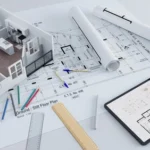
Before discussing site plan cost, it’s essential to understand the purpose of this crucial document. At its core, a site plan (also known as a plot plan or a lot plan) is a detailed, scaled drawing of a property that serves as a visual record for local government officials. It’s the central document in a building permit application that demonstrates how a proposed project will fit on the land and whether it complies with local regulations.
A typical site plan for a permit includes:
- Property Boundaries: The exact dimensions and shape of the lot.
- Existing and Proposed Structures: The location, footprint, and dimensions of the house, garage, or any new structures being built.
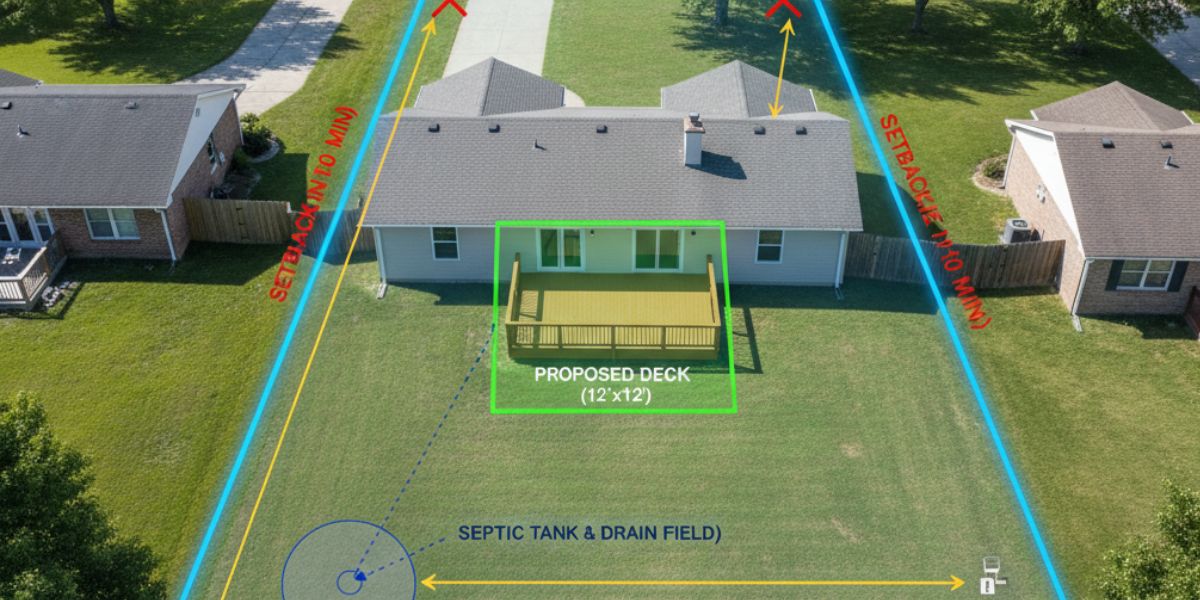
- Setbacks: The required minimum distances between any structure and the property lines, as mandated by local zoning codes.
- Utilities: The location of utility lines, septic systems, wells, and easements.
- Driveways, Sidewalks, and Patios: The layout of existing and proposed hardscapes.
- Key Features: Location of significant trees, slopes, water bodies, and other natural features.
- Scale and Orientation: A clearly marked scale (e.g., 1 inch = 20 feet) and a North arrow to orient the plan.
Without this document, city or county planning departments have no way to verify that a project respects local zoning, safety, and environmental standards. An inaccurate or missing site plan for a permit is the single most common reason for permit application delays or outright denial. For certain projects, like additions that alter a yard, a more specialized plan, such as a landscaping site plan, may also be required.
The Great Misconception: Plot Plan vs. Site Plan vs. Land Survey
A major source of confusion and cost is the difference between a site plan and a land survey. While the terms are often used interchangeably, they are distinct documents with different purposes and costs.
- A Site Plan is a planning document. It is created for a specific project, often using existing public data like plat maps, GIS data, and satellite imagery. Its primary purpose is to illustrate a proposed change to a property for a permit application. Because it doesn’t always require an in-person visit from a licensed professional, it can be significantly more affordable.
- A Land Survey is a legal document. It is a highly accurate, legally binding map created by a licensed land surveyor who physically visits the property, takes precise measurements, and establishes official property boundaries. A survey is required for real estate transactions, boundary disputes, or for new construction where millimetric accuracy is essential.
The cost of a site plan is starkly different. While a homeowner site plan from an online drafting service can cost as little as $99 to $300, a full-scale land survey can range from $500 to over $2,000, and in some cases, much more, depending on the complexity. Knowing which document is needed is the first step in managing a budget. For most small to medium-sized projects like decks, sheds, or home additions, a site plan is often sufficient, but it’s crucial to check with the local jurisdiction first.
The Core Cost Drivers: What Makes a Site Plan Cost Go Up or Down?
The price of a site plan is not arbitrary. It’s a direct reflection of several key variables. By understanding these factors, a property owner can get a better sense of what to expect for a specific project.
Project Complexity and Scope
This is the single biggest factor influencing the cost of a site plan. A plan for a simple, detached shed will be far less expensive than one for a major home addition that includes new plumbing, electrical, and structural changes.
- Simple Projects: These include minor improvements like a small deck, a new fence, or a hot tub installation. The plans are straightforward, and the site plan cost USA will be on the lower end of the spectrum, typically between $99 and $250.
- Intermediate Projects: Think about a new garage, a small home addition, or an in-ground pool. These projects require more detail, including drainage, grading, and a more complex understanding of setbacks. Costs for these plans usually range from $250 to $600.
- Complex Projects: These are major undertakings like building a new home, commercial development, or creating a subdivision. These plans require extensive detail, including grading and erosion control plans, utility connections, and often a full topographic survey. Some of the most complex projects may even require a special approval, such as a conditional use permit. The costs can run from $600 to several thousand dollars.
Property and Location Influences
The characteristics of the land and its location play a significant role in the price.
- Urban vs. Rural: Urban properties are often smaller, with tighter setbacks and more complex zoning rules, which can increase the cost of a site plan. Rural properties, while larger, may have fewer nearby data points for remote drafting services to use, sometimes necessitating a physical survey.
- Topography: A flat, rectangular lot is the easiest and cheapest to map. A sloped, hilly, or irregularly shaped lot will be more challenging and expensive, as it requires more detailed measurements and, in some cases, a topographical survey to show elevation changes.
- Existing Documents: If a property owner has an up-to-date plat map or a recent survey of the property, they can often provide it to a site plan provider, which can reduce the cost and turnaround time.
The Provider Spectrum: A Comparative Cost Analysis
Who is hired to draft the site plan is the most direct influence on the price. There are three main options, each with a different cost structure and level of service.
Option 1: Online Site Plan Drafting Services
- Business Model: These companies specialize in creating permit-ready site plans quickly and affordably. They use a combination of publicly available data, including satellite imagery, GIS (Geographic Information System) parcel data from counties, and public tax records. They don’t typically visit the site.
- Cost: This is the most budget-friendly option, with prices often starting at a flat rate of $99 to $150. The cost scales up with project complexity and optional add-ons like floor plans.
- Pros: Fast turnaround (often within 24 hours), highly affordable, and sufficient for most residential projects.
- Cons: Not suitable for projects with complex topography or boundary disputes. Some jurisdictions may require a stamped plan from a licensed professional.
Option 2: Licensed Land Surveyors
- Business Model: A professional land surveyor is a licensed expert who uses specialized equipment to physically measure and map a property. They provide a legally certified document.
- Cost: This is the most expensive option. A surveyor’s fee can range from $500 to over $2,000 or more, depending on the size of the property and the scope of work.
- Pros: Legally binding, highly accurate, and often required for complex projects, new construction, or when there is a boundary dispute.
- Cons: Expensive and a much longer turnaround time (weeks or even months) due to scheduling on-site visits and drafting.
Option 3: Architects or Engineers
- Business Model: When hiring an architect or engineer for a large-scale project, the site plan is often a component of their overall design service. They use their expertise to integrate the plan into the full set of blueprints.
- Cost: The cost of a site plan is typically bundled into the architect’s or engineer’s total fee, which can be thousands of dollars.
- Pros: Seamlessly integrated with the overall project design, ensuring accuracy and compliance from the start.
- Cons: Not a viable option if only a site plan is needed.
Case Studies: Illustrating the Cost Difference
To put these factors into perspective, here are a few common scenarios for a homeowner site plan.
Case Study 1: The Simple Deck Addition
- Project: A 12×12 foot deck attached to the back of a house.
- Property: A flat, suburban lot with an existing plat map.
- Optimal Provider: An online site plan service.
- Estimated Cost: $99 – $150. The service uses existing public records to draft a simple plan showing the property boundaries, existing house, and the new deck, along with all required setbacks. The project is straightforward, making it highly affordable.
Case Study 2: The Garage Conversion
- Project: Converting an existing garage into a livable space.
- Property: A standard lot, but the homeowner is unsure of the existing setbacks and the location of underground utilities.
- Optimal Provider: A mid-tier online service that offers more detailed plans and research.
- Estimated Cost: $250 – $450. The provider conducts more in-depth research to locate utility easements and verify property lines, ensuring the new structure is compliant. This is still a cost-effective alternative to a full survey.
Case Study 3: New Home Construction
- Project: Building a new two-story home on a previously undeveloped one-acre lot.
- Property: A one-acre lot with a slight slope.
- Optimal Provider: A licensed land surveyor.
- Estimated Cost: $1,500 – $2,500+. For new construction, most jurisdictions require a certified, stamped plan from a licensed surveyor. The surveyor performs a detailed on-site visit to establish legal boundaries and a topographical survey to ensure the home’s foundation is built correctly, factoring in the slope and drainage.
Frequently Asked Question
Q: Do I need a site plan for an interior remodel?
A: Generally, no. Site plans are for projects that alter the exterior of a property or the footprint of a home. Interior remodels, like kitchen or bathroom renovations, typically require a floor plan to show the changes, but not a site plan.
Q: Is the cost of the site plan included in the permit fee?
A: No, these are two separate costs. The site plan is the professional document used to apply for the permit. The permit fee is the cost the local government charges to review the application and issue the official permit to begin work.
Q: Can I get an old site plan from my county records?
A: Sometimes. Many counties keep public records of site plans for properties. These documents may be requested through a public records request. However, these documents may be outdated or may not be accepted for a new project.
Q: What if I have a septic tank or a well? Do I need to show it on my site plan?
A: Yes, absolutely. The location of the septic tank, well, and drain field must be clearly shown on the site plan to ensure a new project doesn’t encroach on any critical systems or cause issues with local health department regulations.
Q: What is a setback, and why is it so important for my site plan?
A: A setback is the minimum distance a building or structure must be from a property line. It’s a key zoning regulation that ensures proper spacing between buildings for fire safety, light, and air circulation. A site plan must accurately show that the project respects these setbacks.
Q: What if my project is on a hill or has a lot of elevation changes?
A: In this case, a topographic site plan may be needed. This type of plan includes contour lines that show the elevation changes of the property. This is crucial for planning drainage, grading, and the foundation of new structures and will increase the cost.
Q: Will a site plan also include floor plans or elevations?
A: A standard site plan focuses on the property layout from an overhead view. However, many services offer bundled packages that include other essential drawings, such as 2D floor plans and elevation plans, for a complete permit package.
Q: What happens if my permit is denied because of the site plan?
A: If a permit is denied, it’s often due to the site plan not meeting specific local codes, such as incorrect setbacks or missing details. In this case, you would need to revise the plan according to the city or county’s feedback and resubmit it with your application.
Q: What if I need a professional stamp or signature on my site plan?
A: Some jurisdictions require a plan to be stamped by a licensed professional like a civil engineer or architect. If you have this requirement, you will need to confirm with the site plan provider if they can accommodate this request, as this service is often an add-on and will increase the cost.
Q: How do I get started with your site plan service?
A: Simply contact us or email drafting@siteplans.online with your project details. We provide a fast, no-obligation quote and deliver your permit-ready site plan within 24–48 hours.
Why Choose Site Plans
When it comes to getting a professional site plan for a permit, a service that is fast, affordable, and reliable is needed. At Site Plans online, we specialize in providing high-quality, professional site plans specifically designed for permit applications. Our plans are crafted by a team of experienced professionals who use advanced technology to create detailed and accurate plans that comply with local regulations.
Our mission is to help streamline the permitting process and get projects started sooner. Our services start at an affordable flat rate, making us a cost-effective alternative to hiring a land surveyor. Whether building a new deck, adding a garage, or getting approval for a commercial project, we have a plan for you.
- Explore Our Services to find the perfect plan for your project.
- Read more about the benefits of our residential site plans.
- Learn how we can assist with complex commercial site plans.
- See how we can provide the floor & elevation plans to complete your permit submission.
Conclusion: A Strategic Approach to Permitting Costs
The cost of a site plan for a permit in the USA is a direct result of a project’s scope, a property’s characteristics, and the type of professional chosen. By understanding the intricate relationship between project complexity, provider type, and jurisdictional requirements, the permitting process can be navigated with a clear financial strategy. Whether a project is a simple shed or a complex home addition, making an informed choice about the site plan provider is the first and most critical step toward a successful and financially sound project.