When I see a rejected site plan, I know the delay is almost always caused by technical non-compliance, not bad luck. Building departments reject drawings when zoning setbacks, property boundaries, structure dimensions, or formatting standards are unclear or incomplete. A rejection does not stop your project, but it signals that measurable corrections are required. In my experience, most site plan denials can be fixed quickly when the deficiencies are addressed with precision. The key is understanding exactly what failed during review and correcting it systematically.
Step 1: Carefully Review the Correction Notice
The first mistake I see homeowners make is reacting without fully analyzing the correction notice. When a site plan is rejected, the building department typically provides written comments outlining specific deficiencies.
Common correction notice items include:
- Setback distances not clearly labeled
- Property boundaries inconsistent with parcel data
- Proposed structure dimensions missing
- Easements not shown
- Driveway access not identified
- Formatting deficiencies such as missing scale or north arrow
Every comment must be addressed individually. Do not assume one correction resolves all issues. A successful resubmission depends on responding directly to each requirement listed.
Step 2: Verify Property Boundaries and Parcel Data
Boundary errors are one of the most common reasons a building permit site plan is rejected. If property lines do not match official county records or a recorded survey, zoning compliance cannot be verified.
To fix this issue:
- Confirm lot dimensions using verified parcel data
- Cross-check against any available survey
- Ensure all boundaries are clearly dimensioned
- Confirm easements are identified if applicable
If the rejection notice references encroachments or setback violations, boundary verification should be your first correction step. Without accurate property lines, all other measurements become unreliable.
Step 3: Recalculate and Clearly Label Setbacks
Setback errors frequently lead to zoning review failure. If your site plan was rejected due to setback compliance, it likely means required versus provided distances were not clearly demonstrated.

To correct setback deficiencies:
- Review local zoning setback requirements
- Measure from the closest edge of the proposed structure
- Label front, rear, and side setbacks clearly
- Ensure measurements are consistent throughout the drawing
Building departments will not infer compliance. They require explicit dimensioning on the site plan itself. Clear labeling eliminates ambiguity during resubmission.
Step 4: Correct Structure Placement and Dimensions
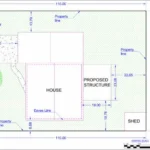
Incomplete or inaccurate structure placement is another common reason a site plan gets rejected by the city. Reviewers must confirm spacing, lot coverage, and compliance with municipal submission standards.
Make sure your revised drawing includes:
- Exact length and width of the proposed improvement
- Distance to all relevant property lines
- Distance to nearby existing structures
- Updated lot coverage calculations if required
If the correction notice references structural spacing issues, your revision must address them directly. Avoid vague adjustments. Every dimension must be precise and clearly visible.
Step 5: Include All Existing Structures and Improvements
Many rejected site plans fail to present a complete property layout. Even if your proposed improvement is accurate, omitting existing structures prevents zoning officials from verifying compliance.
Ensure the revised site plan shows:
- Primary residence footprint
- Detached garages or accessory buildings
- Pools, patios, decks, or sheds
- Driveway placement
The building department must evaluate total lot coverage and structural relationships. A complete view of the property reduces the likelihood of a second rejection.
Step 6: Add Missing Easements and Access Details
If your correction notice mentions easements or access concerns, you must address them clearly in the revised submission.
To correct this:
- Identify utility and drainage easements
- Show right-of-way areas
- Label driveway connections to public streets
- Ensure no encroachments occur within restricted zones
Easements are legally binding and cannot be ignored. Failing to represent them properly often results in repeated rejections.
Step 7: Fix Formatting and Presentation Issues
Formatting deficiencies may seem minor, but they frequently delay approval. A permit-ready site plan must meet professional drafting standards.

Your corrected drawing should include:
- Clearly stated drawing scale
- Visible north arrow
- Legible text and dimension labels
- Proper title block with property address and project description
- Clean, organized layout
Low-resolution files, inconsistent fonts, or unclear dimensioning can result in additional correction comments. Presentation matters in the permit review process.
Step 8: Respond Strategically to Each Comment
When resubmitting, do not simply upload a revised drawing. Address each correction comment systematically.
I recommend:
- Reviewing each item in the correction notice
- Marking how it was resolved on the updated drawing
- Ensuring no previous errors remain
- Confirming compliance with local submission guidelines
A structured response demonstrates professionalism and increases the likelihood of faster approval.
How to Avoid a Second Site Plan Rejection
The most critical objective after a rejection is preventing a second denial. Repeated corrections extend timelines and increase project costs.
To minimize that risk:
- Double-check zoning compliance before resubmission
- Verify all measurements
- Confirm lot coverage calculations
- Review easements carefully
- Ensure formatting meets municipal standards
A corrected site plan must be more than revised. It must be comprehensive, accurate, and fully aligned with building department expectations.
Conclusion
A rejected site plan does not end your permit process, but it does require precise correction. When zoning compliance, setbacks, structure dimensions, easements, and formatting standards are clearly addressed, approval becomes significantly more achievable. Building departments respond to accuracy and clarity. A carefully revised submission reduces delays and prevents repeated correction cycles.
Why Choose Us
We provide professionally revised site plans designed to meet municipal review standards and accelerate permit approval.
- Detailed correction of zoning and setback deficiencies
- Accurate boundary verification using parcel data
- Clear structure placement and dimension labeling
- Professional formatting aligned with local submission standards
- Fast turnaround to minimize project delays
Frequently Asked Questions
2. Can I resubmit the same drawing after minor changes?
Only if every correction comment has been fully resolved and compliance is clearly demonstrated.
1. What should I do first after my site plan is rejected?
Review the correction notice carefully and address each listed deficiency before resubmission.
3. How long does it take to get approval after resubmission?
Approval timelines depend on your municipality, but accurate revisions typically shorten the review cycle.
4. Why do site plans get rejected more than once?
Repeated rejections occur when correction comments are only partially addressed or new compliance issues are introduced.
5. Can professional revision help prevent a second rejection?
Yes, precise drafting aligned with zoning and municipal requirements significantly reduces the risk of repeated denials.