For any homeowner embarking on a construction or renovation project, the initial steps often lead to a critical question: should I attempt creating a site plan myself, or is it better to hire a professional? This decision directly impacts your project’s timeline, budget, and ultimate success. While the DIY route can seem appealing for its cost savings, the professional approach offers a level of expertise and accuracy that is often essential for securing a permit. If you’re wondering about the distinction between a site plan, a plot plan, and a land survey, we have a detailed article that can help you understand the differences and their purposes.
This article explores both sides of the coin, breaking down the pros, cons, and key considerations for creating a site plan in the USA, helping you determine which path is right for your specific project.
The DIY Approach to Creating a Site Plan: A Deeper Look
A do-it-yourself site plan involves a homeowner taking on the task of drafting the document themselves. This is typically done by using publicly available resources such as county GIS (Geographic Information System) parcel data, property tax records, satellite imagery, and even free online tools. The DIY approach is often seen as a noble first attempt, a way to test the waters of a project and save money before committing to larger costs. However, while it can be a valuable learning experience, it comes with significant risks that can derail a project before it even begins.
Pros: The Allure of Saving Money and Learning
- Significant Cost Savings: This is the most compelling argument for the DIY path. A professional site plan can range from a few hundred to several thousand dollars, depending on the provider and project complexity. By doing it yourself, you eliminate this line item from your budget entirely, a powerful incentive for small-scale projects.
- Ultimate Control and Speed: With a DIY approach, you work on your own schedule. There’s no waiting for a professional to respond to an email, schedule a site visit, or fit your project into their queue. If you are already familiar with your property, you can get started immediately.
- A Valuable Educational Experience: Attempting to draft a site plan forces you to intimately understand your property’s dimensions, local zoning regulations, and the location of critical features like utility lines and easements. This process provides a deeper appreciation for the complexities of a project. For a simple fence or shed that may not even require a permit, this hands-on learning might be all you need.
Cons: The Hidden Dangers of Inaccuracy and Rejection
The downsides of a DIY site plan often outweigh the initial benefits, especially for projects that require a permit. The savings can quickly be wiped out by delays, redesign costs, or even legal issues.
- High Risk of Inaccuracy: This is the single biggest pitfall. Publicly available data, while useful, is often not precise enough for a permit application. Property lines from a GIS map may be off by several feet. Satellite imagery can be outdated, failing to show recent changes. You may also miss crucial, non-visible details like buried utility lines, easements that grant others access to a portion of your property, or the location of a septic system’s drain field. An inaccuracy could lead to building over a utility line or violating a setback, creating a major legal and financial headache.
- Lack of “Permit-Readiness”: Permit applications are not just about showing where your project will go. They are about demonstrating compliance with a dizzying array of local codes. A DIY plan often lacks the specific details required by a building department. This could include a detailed legend, a specific drawing scale, a clear north arrow, or specific callouts for setbacks and fire access. Without these elements, a plan is likely to be rejected immediately, leading to frustrating resubmissions and delays.
- The Missing Professional Stamp: In many jurisdictions, especially for major projects like home additions or new construction, a site plan must be signed and stamped by a licensed professional—a land surveyor, civil engineer, or architect. This stamp serves as a legal guarantee of accuracy. A DIY plan, by definition, cannot have this stamp, making it ineligible for submission in these cases. Submitting a plan without the required stamp will result in an automatic permit denial.
The Professional Approach to Creating a Site Plan
Hiring a professional service means outsourcing the entire process to experts who specialize in creating detailed and accurate plans. This includes using online site plan services, licensed land surveyors, or architects. This approach, while costing more upfront, is often the most cost-effective and efficient path in the long run.
Pros: The Benefits of Expertise and Peace of Mind
- Guaranteed Accuracy and Compliance: Professionals use a combination of advanced software, up-to-date GIS data, and, if necessary, on-site measurements to create a plan that is precise and to scale. They are familiar with local zoning regulations and will ensure your plan meets all setback requirements, impervious surface limits, and other crucial codes.
- A Truly Permit-Ready Document: Professional services know exactly what building departments look for. Their plans are structured to be clear, comprehensive, and ready for a smooth submission. They include all necessary details, from the location of utility easements to a clear legend and north arrow, minimizing the chance of a permit denial due to a clerical or technical error.
- Massive Time Savings: Hiring a professional frees you from the time-consuming process of researching, measuring, and drafting. What might take a homeowner weeks of frustrating work can often be completed by an online service within 24-48 hours. This allows you to focus on other critical aspects of your project, from design to material selection.
- Peace of Mind: Perhaps the most significant advantage is the confidence that comes with a professionally prepared document. You can rest assured that your project is compliant, legally sound, and won’t lead to costly surprises down the road, such as being forced to move a structure that was built too close to a property line.
Cons: The Cost and Turnaround Time
- Higher Cost: A professional site plan costs more than a DIY version. While online services are affordable (typically starting around $99), a full land survey can cost thousands. The price is a direct reflection of the expertise, technology, and legal responsibility the professional is providing. For a more detailed breakdown of these costs, read our article on The True Cost of Getting a Site Plan for Permit.
- Turnaround Time: While online services are remarkably fast, a traditional land survey requires an on-site visit and can take several weeks or even months to complete, especially in busy seasons.
The Anatomy of a Perfect Site Plan
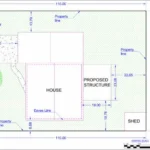
To truly understand the difference between DIY and professional, it’s helpful to see what a perfect, permit-ready site plan looks like. It is far more than just a simple drawing of a house on a lot. It is a detailed legal and technical document.
- Clear Title Block: This includes the project title, property address, owner’s name, date, drawing scale, and contact information for the drafter.
- North Arrow and Drawing Scale: These are non-negotiable. The North Arrow provides orientation, and the scale ensures the plan can be accurately measured by a reviewer.
- Property Boundaries and Dimensions: All property lines must be clearly shown with their exact dimensions and bearings (e.g., ).
- Existing Structures: The location, footprint, and dimensions of all existing buildings on the property, including the house, garage, shed, etc.
- Proposed Structures: The location, footprint, and dimensions of the new structure, clearly labeled with its purpose (e.g., “Proposed Deck,” “New Detached Garage”).
- Setbacks: This is critical. The plan must show the setback lines (the minimum distance a structure must be from the property lines) and include clear callouts proving the new project respects these lines.
- Easements: Legal easements, such as those for utilities or access, must be clearly marked. Building over an easement is a major violation that can lead to being forced to remove the structure.
- Utilities and Features: All existing utility lines (sewer, water, gas, power), as well as private systems like septic tanks and wells, must be located and labeled. Any significant natural features like large trees, streams, or steep slopes should also be included.
- Grading and Drainage: For projects that alter the land, a professional plan will include contour lines to show the change in elevation and a plan to manage drainage.
Detailed Case Studies: The Real-World Impact
To illustrate the difference, let’s look at two common scenarios.
Case Study 1: The DIY Gone Wrong
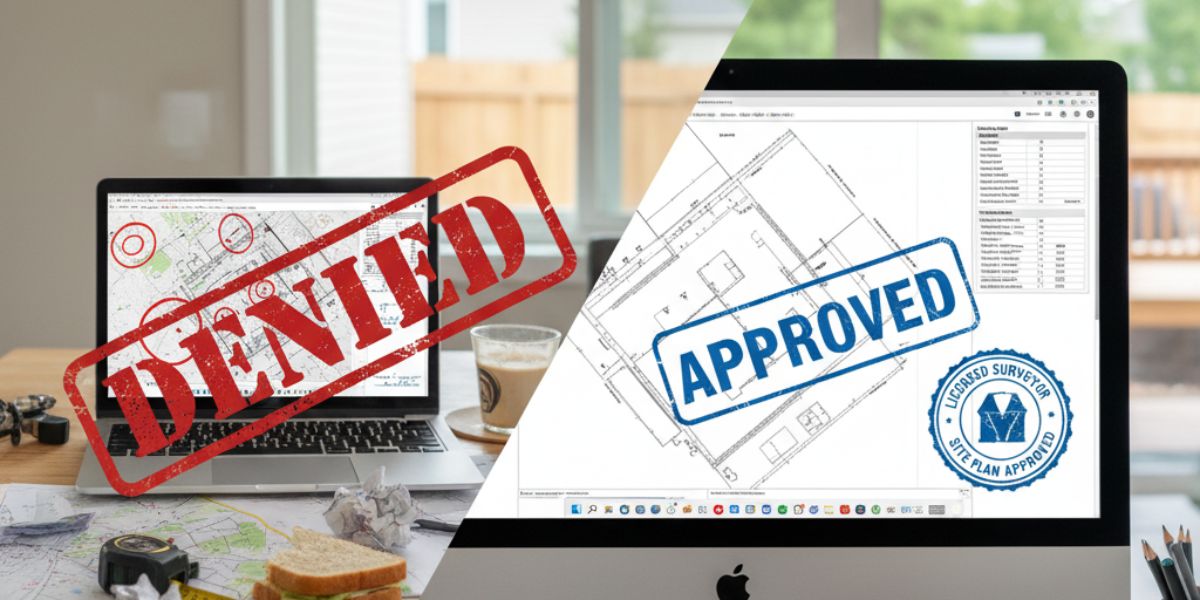
Jane wants to build a 12×12 foot shed in her suburban backyard. She finds her property on her county’s GIS website and takes a screenshot. She then uses a free online drawing tool to sketch her property, the existing house, and the proposed shed. She measures the distance from her fence to the shed and finds it’s over the 5-foot setback limit. Confident in her work, she submits the permit application.
A few weeks later, she gets a denial letter. The reason? The city’s records show a 10-foot sewer easement running along the back of her property, which her DIY plan did not show. Her proposed shed sits directly on this easement. The city also noted that her plan was not to scale, and her setbacks were not properly labeled. She wasted weeks and has to redesign the entire project. She then has to hire a professional to create a new, compliant plan, ultimately spending more time and money than if she had hired a pro from the start.
Case Study 2: The Professional Success
Mark wants to build a new deck off the back of his house. He contacts an online site plan service, provides a few photos and a description of his project. Within 48 hours, he receives a detailed, permit-ready plan. The plan is to scale, shows all property boundaries, clearly marks setbacks, and even includes a note about a minor utility line near the project area. He submits the plan with his permit application.
A week later, his permit is approved. The city reviewer had no issues with the plan because it was accurate, well-formatted, and contained all the required information. Mark saves time and avoids the stress of a potential denial, allowing him to begin his project on schedule and with the confidence that it meets all legal requirements.
The Hybrid Option: Getting the Best of Both Worlds
The choice isn’t always black and white. For many homeowners, the best solution is a “hybrid” approach that uses an online professional service. These services leverage a blend of technology and human expertise. They use the same public data as a DIY enthusiast, but they also have access to more accurate and current databases. Most importantly, their drafters are trained to spot potential issues and format the plan to meet the rigorous standards of a building department. This provides a professional, permit-ready document at a fraction of the cost of a full land survey, making it the perfect middle ground for most residential projects.
Why Choose Site Plans
When it comes to getting a professional site plan for a permit, a service that is fast, affordable, and reliable is needed. At Site Plans online, we specialize in providing high-quality, professional site plans specifically designed for permit applications. Our plans are crafted by a team of experienced professionals who use advanced technology to create detailed and accurate plans that comply with local regulations.
Our mission is to help streamline the permitting process and get projects started sooner. Our services start at an affordable flat rate, making us a cost-effective alternative to hiring a land surveyor. Whether building a new deck, adding a garage, or getting approval for a commercial project, we have a plan for you.
- Explore Our Services to find the perfect plan for your project.
- Read more about the benefits of our residential site plans.
- Learn how we can assist with complex commercial site plans.
- See how we can provide the floor & elevation plans to complete your permit submission.
Frequently Asked Questions
Q: Can I use a DIY site plan for a major home addition? A: It is highly unlikely. Most jurisdictions require a professionally prepared and often stamped site plan for projects that alter the footprint or structural elements of a home. Attempting to submit a DIY plan for a major addition will likely lead to a permit denial and significant delays.
Q: What if I have an old land survey? Can I use that to create a site plan? A: An old survey is an excellent starting point. You can use it as a base to create your own plan, but a professional service can use that data to create a modern, permit-ready document that includes your proposed changes and meets current code requirements.
Q: Is it illegal to submit an inaccurate DIY site plan? A: While it may not be illegal in all cases, submitting an inaccurate plan can be considered falsifying information on a permit application, which can have serious consequences. It’s not worth the risk, as it can lead to fines, project shutdowns, or being forced to tear down a structure.
Q: What is a setback, and why is it so important for a site plan? A: A setback is the minimum distance a building or structure must be from a property line. It’s a key zoning regulation that ensures proper spacing between buildings for fire safety, light, and air circulation. A site plan must accurately show that the project respects these setbacks.
Q: How do I know if my local jurisdiction requires a professional stamp? A: The best way is to check the official website of your local city or county planning and zoning department. Their permit application guidelines will clearly state whether a plan from a licensed architect, engineer, or surveyor is required.
Q: Can I use a professional online service to get a stamped plan? A: Many online services offer a stamped plan as an add-on service. This is handled by a licensed professional in your state who will review, certify, and stamp the document for an additional fee.
Q: What is the benefit of a professional site plan for a simple project? A: Even for a simple project like a shed or deck, a professional site plan ensures accuracy and compliance with local codes, preventing potential issues with neighbors and avoiding costly mistakes that could require you to move or alter the structure after it is built.
Q: Can I use a professional site plan from a previous project for a new one? A: You should not. A site plan is project-specific. It is drafted to show a single, specific set of proposed changes. Reusing an old plan could lead to your new project being denied if it doesn’t match the original plan exactly.
Q: What is the most common mistake people make when creating a site plan themselves? A: The most common mistake is failing to accurately show setbacks and easements. These are often difficult to find on public records and can easily be miscalculated, leading to your project being denied.
Q: How do I get started with your site plan service? A: Simply contact us or email drafting@siteplans.online with your project details. We provide a fast, no-obligation quote and deliver your permit-ready site plan within 24–48 hours.
Conclusion: Making the Right Choice
The choice between DIY and professional depends on the complexity and requirements of your project. While creating a site plan yourself might save you a little money upfront, the risks of a denied permit, costly project delays, or legal issues with neighbors far outweigh the initial savings. For any project that requires a permit, the professional route is a small investment that provides the accuracy, speed, and peace of mind you need to ensure a successful and compliant outcome. The best strategy for most homeowners is to opt for a professional service that balances affordability with the expertise required to get your project approved the first time.