Expanding your driveway may appear simple, but from a permitting standpoint, it requires careful documentation and zoning verification. I’ve worked with homeowners across many jurisdictions, and I’ve seen projects delayed simply because lot coverage limits or setback distances were misunderstood.
A properly prepared driveway expansion permit site plan allows the building department to quickly confirm zoning compliance, drainage considerations, and property boundary accuracy. When the drawing is clear and professionally structured, reviewers can approve it without entering a correction cycle.
If you’re planning to widen or extend your driveway, understanding what must be shown on the site plan is essential for avoiding delays.
Why a Driveway Expansion Requires a Permit
Most cities regulate driveway expansions because they directly impact:
- Lot coverage limits
- Stormwater runoff
- Public right-of-way access
- Curb cut standards
- Neighborhood zoning compliance
Even a moderate driveway widening increases the impervious surface area of your property. That change can affect drainage patterns and allowable coverage percentages under local zoning rules.
Building departments typically require confirmation that the expansion:
- Does not exceed maximum lot coverage
- Maintains required setback distances
- Does not interfere with utility easements
- Complies with municipal curb cut and access standards
In many areas, exceeding allowable driveway width at the curb can trigger immediate rejection. Before drafting any drawing, I verify driveway expansion zoning requirements specific to the property’s jurisdiction. Every city has its own dimensional limits that must be reflected accurately on the plan.
What Must Be Included on a Driveway Expansion Permit Site Plan
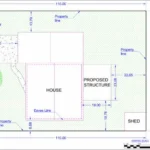
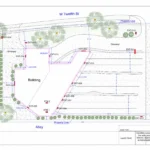
A compliant driveway expansion permit site plan must clearly show both existing and proposed conditions. Reviewers should immediately understand what is currently on the property and what changes are being introduced.
Clarity is critical. If a reviewer has to interpret or assume details, correction comments are likely.
1. Property Boundaries and Lot Dimensions
Accurate property line measurements form the foundation of the site plan.
The drawing should include:
- Complete lot dimensions
- Total lot area
- Adjacent streets
- Location of existing structures
- Any recorded easements
Whenever possible, I confirm dimensions using official records or a recent survey. Small discrepancies in boundary measurements are one of the most common reasons site plans are rejected during city building department review.
2. Existing Driveway Layout

The current driveway configuration must be illustrated clearly. Reviewers compare the proposed expansion against existing conditions to verify compliance.
The drawing should show:
- Existing driveway width and length
- Distance from driveway edges to property lines
- Distance to structures such as the home or garage
- Any nearby easements
If the existing driveway is not clearly labeled, the building department cannot accurately evaluate how the expansion affects zoning setbacks.
3. Proposed Expansion Details
The expanded driveway area must be clearly distinguishable from the existing layout. I typically label or lightly shade the proposed section to eliminate confusion.
Your plan should include:
- Proposed new width
- Total driveway width after expansion
- Surface material (if required by the city)
- Updated setback measurements
Vague expansions or missing dimensions frequently lead to correction comments. A properly drafted site plan for driveway permit approval must leave no ambiguity about what is changing.
4. Zoning and Setback Compliance
Driveway expansions are often limited by zoning setback requirements. Some cities require a minimum side yard distance, while others restrict driveway width at the property line or curb.
Before finalizing the drawing, I verify:
- Minimum side yard setbacks
- Maximum driveway width allowed
- Required green space percentages
- Lot coverage limits
In certain cases, expanding a driveway too close to the property line may require a variance rather than a standard permit. Identifying that early prevents unnecessary application fees and delays.
5. Impervious Surface and Drainage Considerations
Driveways are classified as impervious surfaces. Expanding them increases runoff, which may affect stormwater compliance.
Many jurisdictions require:
- Updated impervious surface calculations
- Confirmation that runoff does not impact neighboring properties
- Drainage direction indicators
- Surface material identification
I prioritize including surface area calculations when required. Providing these details upfront demonstrates preparedness and often reduces follow-up questions from reviewers.
Step-by-Step Process to Prepare the Site Plan
Measure and Verify Property Information
Start by confirming lot dimensions using official records, GIS data, or a property survey. Accuracy at this stage prevents zoning conflicts later.
Draft the Existing Layout
Illustrate your home footprint, garage location, current driveway alignment, and property boundaries. Include clear measurements and labels.
Add Proposed Expansion
Show the new expanded driveway section with exact dimensions. Confirm that setback requirements remain compliant after expansion.
Confirm Zoning Compliance
Review the drawing against local zoning codes and driveway expansion requirements. I’ve seen firsthand that proactive zoning verification prevents costly revision cycles.
Prepare Digital Submission Format
Most building departments require a clean, scaled PDF file for submission. The drawing must remain readable when zoomed in.
At SitePlans.online, I prepare driveway permit site plans formatted specifically for digital building department portals across the United States. Clean formatting ensures reviewers can evaluate plans efficiently without technical issues.
Common Reasons Driveway Permit Applications Are Rejected
Understanding common rejection causes helps prevent delays. Over the years, I’ve noticed consistent patterns:
- Missing setback measurements
- Incomplete property dimensions
- Failure to clearly distinguish proposed expansion
- Exceeding maximum allowable driveway width
- Lack of impervious surface calculations
- Unclear or unscaled drawings
When the plan leaves questions unanswered, the reviewer must issue correction comments. Each correction cycle adds time to the approval process.
When Professional Drafting Support Becomes Important
While some homeowners attempt to prepare their own sketches, building departments expect scaled and accurate documentation. A professionally prepared residential driveway permit drawing significantly reduces rejection risk.
At SitePlans.online, I assist clients nationwide by preparing compliant driveway expansion permit site plans tailored to local zoning codes. My approach prioritizes accuracy, clarity, and digital submission readiness.
Expanding a driveway should improve your property not delay your project. With proper measurements, zoning verification, and structured documentation, the permit approval process becomes predictable and manageable.
Final Thoughts
Preparing a compliant driveway expansion permit site plan requires more than simply drawing a wider driveway. Zoning setbacks, lot coverage limits, and impervious surface calculations must all be verified before submission.
When the site plan clearly illustrates existing and proposed conditions, the building department can complete its review efficiently. A structured and accurate approach reduces delays and keeps your driveway project moving forward.
Why Choose SitePlans.online
Preparing a driveway expansion permit site plan requires more than basic measurements. Zoning compliance, impervious surface limits, and setback verification must be documented accurately for city approval.
At SitePlans.online, I focus on preparing permit-ready site plans designed specifically for building department review standards across the United States.
What sets us apart:
- Accurate, scaled driveway permit drawings aligned with local zoning codes
- Clear documentation of existing and proposed driveway layouts
- Verification of setback requirements and lot coverage limits
- Impervious surface calculations when required
- Clean, digital-ready PDF formatting for online submission portals
- Structured revision support if correction comments are issued
My goal is simple: reduce rejection risk and help your driveway permit move through review efficiently.
Frequently Asked Questions
1. Do I need a site plan for a driveway expansion permit?
In most cities, yes. A driveway expansion changes lot coverage and impervious surface calculations, which require review by the building department. A scaled site plan allows officials to verify zoning compliance before approval.
2. What should be included in a driveway expansion permit site plan?
Your site plan should include property boundaries, lot dimensions, existing driveway layout, proposed expansion details, setback measurements, and updated total driveway width. Some cities also require impervious surface calculations.
3. How close can I expand my driveway to the property line?
Setback rules vary by jurisdiction. Many cities require a minimum side-yard distance, and some restrict driveway width at the curb. Always verify local zoning codes before finalizing your plan.
4. Does expanding my driveway affect lot coverage limits?
Yes. Driveways are considered impervious surfaces. Expanding your driveway increases total lot coverage, which must remain within allowable zoning limits to avoid denial or variance requirements.
5. Can I submit my driveway permit site plan online?
Most cities now require digital submission through an online permit portal. The drawing must be properly scaled, clearly labeled, and submitted in clean PDF format for review.