The process of obtaining a building permit often hinges on a single technicality: the level of certification required for your site plan. While many homeowners assume that every site plan needs a professional stamp, the reality in 2026 is much more nuanced. Understanding the difference between a standard technical drawing and a certified engineering document can save you thousands of dollars and weeks of administrative delays.
Decoding the Terms: Certified vs. Non Certified
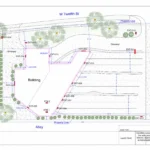
In the world of urban planning, certified refers to a document that has been reviewed, signed, and stamped by a state licensed professional typically a Land Surveyor (PLS) or a Civil Engineer (PE). This stamp is a legal guarantee that the information on the plan is accurate to a specific set of professional and legal standards.
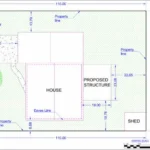
Conversely, a non certified plan, often provided by expert drafting services, is a highly accurate technical drawing created using GIS data, satellite imagery, and property deeds. For the vast majority of residential projects such as sheds, decks, patios, and simple fences a non certified plan is not only accepted by city building departments but is also the preferred cost effective option. However, as projects grow in scale or technical risk, the city’s requirements shift toward certification to mitigate liability.
When Certification Is Mandatory: The Red Flags
Building departments typically trigger a requirement for a certified site plan when the project involves high levels of liability, complex infrastructure, or public safety concerns. If your project falls into one of the following categories, you should prepare for the possibility that an engineer or surveyor will need to be involved.
- Major Structural Additions: If you are doubling the footprint of your home or adding a second story, the city may require a certified plan to verify structural setbacks and foundation safety.
- Significant Grade Changes: In 2026, many smart cities require certified topography for any project that moves more than 50 cubic yards of earth or significantly alters neighborhood drainage.
- Encroachment Concerns: If your proposed structure is within a few inches of a setback line or a known utility easement, a surveyor’s stamp is often required to prove you aren’t building on city property.
- Commercial Developments: Almost all commercial site plans require professional certification due to the complexity of public access, fire safety, and ADA parking requirements.
The Role of the Wet Stamp in Modern Permitting
Even with the move toward digital submittals, the wet stamp (or its secure encrypted digital equivalent) remains the gold standard for legal verification. When an engineer stamps a plan, they are taking professional responsibility for the calculations therein. This is particularly relevant for subdivision site plans, where the layout of new roads and sewer lines must meet strict municipal engineering standards to be adopted into the city’s infrastructure.

For most homeowners, the need for a stamp is the exception rather than the rule. In fact, many building departments allow As Built drawings prepared by professional drafters for 90% of home improvement permits. Using as built site plans allows you to document the current state of your property with professional clarity without the four figure price tag of a full civil engineering firm.
Topographic Requirements and Steep Slopes
One of the biggest drivers for certification in 2026 is topography. As climate change leads to more frequent heavy rainfall events, building departments are hyper focused on how new construction affects water runoff and soil stability. If your property has a slope of more than 10% to 15%, the city will likely demand a certified topographic survey.
A surveyor will physically visit the site to mark the exact elevation changes, which are then used to create a grading plan. While a standard residential site plan can show general slopes using GIS data, a certified plan provides the dead on accuracy required for complex foundation designs on hillsides. If your lot is relatively flat, you can often bypass this requirement and use a standard scaled drawing.
Navigating Local Zoning and Critical Areas
Every municipality has Critical Areas or Environmental Overlays. These are zones—such as wetlands, shorelines, or historic districts where the rules are significantly tighter. In these areas, the city almost always requires a certified professional to mark the Ordinary High Water Mark or the exact edge of a protected wetland buffer.

- Wetlands: Construction near protected water usually requires a certified biologist and a surveyor to flag the boundaries.
- Historic Districts: May require an architect’s stamp to ensure the facade and layout match specific aesthetic and cultural codes.
- Fire Zones: In Wildland Urban Interface (WUI) zones, a certified plan might be needed to show specific defensible space measurements for emergency access.
If you aren’t sure if your property is located in a critical area, checking comprehensive site plan packages can help you identify what level of detail is standard for your specific region and project type.
The Difference in Cost and Lead Time
The decision between a drafting service and a certified engineer is often a matter of budget. A professional drafting service can typically deliver a permit ready site plan for a few hundred dollars with a 24 hour turnaround. Conversely, a certified survey or engineering plan can cost anywhere from $1,500 to $5,000 and may take several weeks to schedule and complete.
For many homeowners, the best strategy is to start with a professional drafting service. If the building department reviews the plan and explicitly requests a stamp, you can then take that draft to a local engineer. This often speeds up the engineer’s work, as they already have a digital base map to work from, potentially lowering their final bill.
Cross Checking Your Permits: Elevations and Floor Plans
A common point of confusion occurs when a city asks for certified plans but is actually referring to the structural drawings rather than the site plan. It is common for a city to accept a non certified site plan while simultaneously requiring a stamped elevation plan for the building’s height and structural integrity.

Similarly, if you are doing a complex interior remodel that involves removing load bearing walls, your floor plans for permits will almost certainly need an architect’s or engineer’s stamp, even if the site plan (showing the property boundaries) does not. Keeping these documents distinct will help you navigate the permit office more efficiently and avoid paying for engineering stamps where they aren’t legally required.
How to Confirm What Your City Needs
Before spending money on any professional service, your first stop should be the city’s website or the Permit Center counter. Most jurisdictions provide a Site Plan Checklist that explicitly states who can prepare the plan.
- Check for Professional Credentials: Does the checklist say Prepared by a licensed professional? If not, a drafter is usually fine.
- Check the Project Type: Does the city allow Owner prepared or Drafter prepared plans for minor residential projects like sheds or fences?
- Ask About Plat Maps: Sometimes, providing a copy of your recorded Plat Map along with a new site plan satisfies the city’s requirement for boundary verification without a new survey.
Conclusion: Making the Right Choice for Your Project
In 2026, the certified requirement is no longer a mystery. It is a specific tool used by cities to manage high risk construction. For the average homeowner adding a shed, pool, or small addition, a high quality, non certified site plan is usually the fastest and most economical path to approval. By understanding the triggers for professional certification—like steep slopes, commercial use, or critical area overlays you can approach the permit office with confidence and avoid the rejection loop that plagues so many DIY projects.
FAQs
1. Is a Certified Plot Plan the same as a Certified Site Plan?
Yes. In most areas, both terms mean a site plan that has been reviewed and stamped by a licensed surveyor or engineer to verify property lines and structure locations.
2. Can I get a certified site plan online?
No. A licensed professional must verify site conditions, usually through a property visit. Drafting can be done online, but certification requires a physical review and stamp.
3. What happens if I submit an uncertified plan when certification is required?
Your permit application will be rejected or marked incomplete. You will need to hire a licensed professional, obtain certification, and resubmit—often with additional fees.
4. Why does my pool permit require a certified plan?
Pools affect drainage, setbacks, easements, and utilities. Cities require certification to prevent property line violations and liability issues.
5. Does a professional stamp expire?
No, but it only applies to the exact version of the plan stamped. Any major changes require a new review and re-stamp.