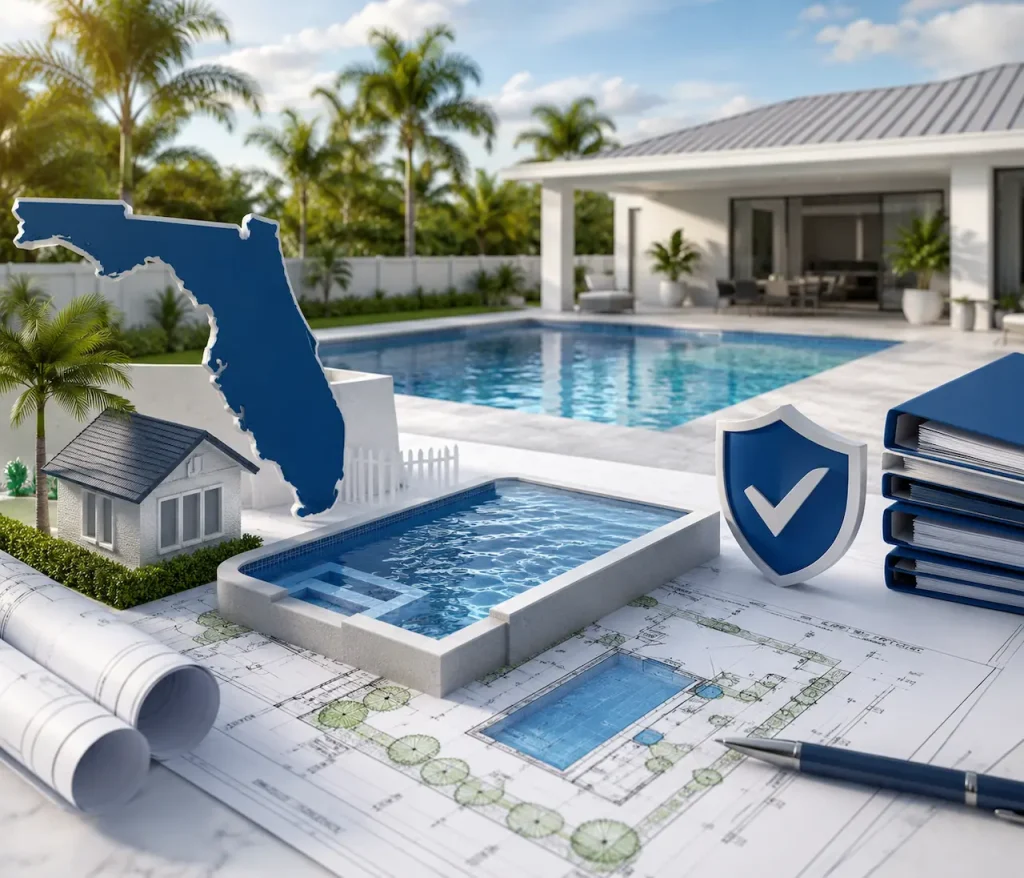
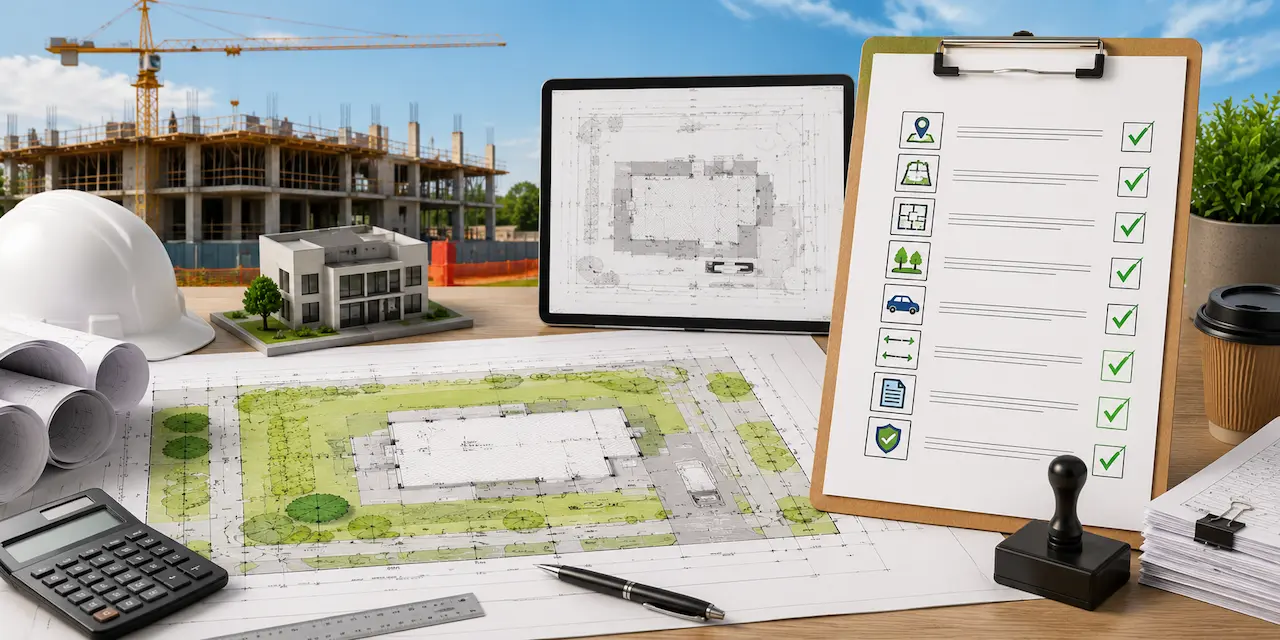
Before submitting a building permit application, review your site plan carefully. A complete permit site plan should clearly show the property, existing conditions, proposed construction, required setbacks, dimensions, access points, and other details requested by the reviewing city or county.
This checklist covers the elements commonly reviewed for residential, pool, ADU, and commercial permit applications across the United States. However, requirements vary by jurisdiction, zoning district, property conditions, and project type.
Use our USA Permit Requirements Checker to identify the likely requirements for your location before submitting.
What Should a Construction Site Plan Include?
A construction site plan for permit submission generally includes:
- Property boundaries and lot dimensions
- Existing and proposed structures
- Distances between structures and property lines
- Required front, side, and rear setbacks
- Streets, driveways, walkways, and access points
- Easements, utilities, drainage, and septic features when applicable
- A north arrow and stated drawing scale
- Project details, owner information, and revision information
- Lot coverage or impervious-surface calculations when required
A site plan is not simply a drawing of the proposed project. It must provide enough property-level information for the building or planning department to confirm compliance with zoning, access, drainage, safety, and development standards.
Why a Pre-Submission Checklist Matters
Many permit delays are caused by preventable omissions rather than major design problems.
Common examples include:
- A missing north arrow
- Unlabeled setback dimensions
- An existing shed, pool, fence, or driveway omitted from the plan
- Property lines without measurements
- Missing lot-coverage calculations
- A file that does not follow the permit portal’s naming or size rules
Even a small omission may result in a correction notice and another review cycle. Reviewing the plan before submission can reduce avoidable revisions and help the permit examiner understand the project more quickly.
You can also upload an existing drawing to our Site Plan Checker to review it for common missing elements.
Universal Site Plan Checklist for All Project Types
Property Identification
☐ Full property address
☐ Parcel number, assessor’s parcel number, or folio number
☐ Legal description, when required
☐ Property-owner name
☐ Names of adjacent streets and rights-of-way
☐ Zoning district, when requested by the jurisdiction
Property Lines and Lot Dimensions
☐ All property boundaries clearly shown
☐ Length of each property line labeled
☐ Lot width, depth, and total area identified when required
☐ Existing easements shown and labeled
☐ Rights-of-way identified
☐ Survey or recorded plat information referenced when required
Drawing Standards
☐ Plan drawn to an accepted engineering or architectural scale
☐ Written scale shown on the plan
☐ Graphic scale included where appropriate
☐ North arrow clearly visible
☐ Text, dimensions, and linework legible at the submitted page size
☐ Existing and proposed work visually distinguishable
Do not assume every jurisdiction accepts the same scale. A scale such as 1 inch equals 20 feet is common for some residential site plans, but the required scale depends on lot size and local submission standards.
Title Block and Project Information
☐ Owner’s name
☐ Property address
☐ Parcel or folio number
☐ Project description
☐ Preparer’s name and company
☐ License information when professional certification is required
☐ Date prepared
☐ Drawing-sheet number
☐ Revision date and revision description for resubmittals
Existing Site Conditions
☐ Existing house or principal building footprint
☐ Dimensions of existing buildings
☐ Garages, sheds, decks, patios, pools, fences, and retaining walls
☐ Existing driveway, parking, sidewalks, and other hard surfaces
☐ Utility lines or utility locations when required
☐ Drainage features, swales, ditches, or stormwater facilities
☐ Septic tank and drain-field locations when applicable
☐ Wells, water bodies, flood zones, or environmentally restricted areas when applicable
☐ Significant grade changes, slopes, or contours when required
Proposed Construction
☐ Proposed work clearly labeled as “proposed”
☐ Proposed structure location and dimensions
☐ Distance from the proposed work to every relevant property line
☐ Distance between proposed and existing structures
☐ Front, side, and rear setback dimensions
☐ Building overhangs, steps, porches, decks, or projections shown
☐ Changes to driveways, parking areas, walkways, or access points
☐ Areas of demolition or removal identified
☐ Construction limits or disturbed area shown when required
Lot Coverage and Site Calculations
☐ Total lot area
☐ Existing building coverage
☐ Proposed building coverage
☐ Existing and proposed impervious-surface area
☐ Final lot-coverage percentage
☐ Comparison with the maximum allowed by the zoning district
☐ Open-space or landscape calculations when required
Submission Format
☐ Correct document format, usually PDF for online portals
☐ Correct sheet size and orientation
☐ File size within the portal limit
☐ File named according to the city or county convention
☐ Pages arranged in the required order
☐ Digital signatures or seals included when required
☐ Supporting forms and documents attached separately where requested
Pool Site Plan Checklist
In addition to the universal checklist, a pool permit site plan may need to show:
☐ Pool length, width, shape, and location
☐ Distance from the pool water’s edge to property lines
☐ Distance from the pool to the house and other structures
☐ Pool deck dimensions
☐ Pool-equipment location
☐ Safety-barrier or enclosure location
☐ Fence and gate locations
☐ Gate swing, self-closing, and self-latching details where required
☐ Utility and overhead-line clearances
☐ Septic tank and drain-field separation where applicable
☐ Flood-zone information where applicable
☐ Drainage or grading changes caused by the pool or deck
Florida jurisdictions may also request pool-barrier documentation or health-department approval for properties served by septic systems. Requirements should be confirmed with the applicable county or municipality rather than assumed for every Florida project.
Commercial Site Plan Checklist
Commercial projects generally require more detailed site and accessibility information.
☐ Building footprint and use
☐ Property lines and required buffers
☐ Parking layout and total parking count
☐ Accessible parking spaces and access aisles
☐ Accessible route from parking to the entrance
☐ Vehicle ingress and egress
☐ Drive aisles and turning movements
☐ Fire-lane access
☐ Fire-apparatus turning information where required
☐ Loading areas and service zones
☐ Dumpster or waste-enclosure location
☐ Sidewalks and pedestrian circulation
☐ Landscaping and screening
☐ Site lighting when required
☐ Drainage and stormwater features
☐ Utility connections
☐ Signage locations where part of the application
☐ Professional engineering or architectural certification when required
Commercial, grading, drainage, structural, and certain land-development projects may require review by a licensed professional. Learn more about PE Stamp Services before ordering or submitting a commercial drawing.
ADU Site Plan Checklist
An accessory dwelling unit site plan may need to include:
☐ Proposed ADU location and dimensions
☐ ADU type: detached, attached, conversion, or internal
☐ Distance from the ADU to all property lines
☐ Distance between the ADU and primary residence
☐ Building height when relevant
☐ Existing and proposed parking
☐ Driveway and pedestrian access
☐ Water, sewer, septic, and electrical connections
☐ Fire-access information where required
☐ Lot-coverage and floor-area calculations
☐ Easements or utility constraints
☐ Trees, slopes, flood zones, or other site limitations
☐ Addressing or unit-number information when required
Before purchasing drawings, use the ADU Feasibility Checker to review basic lot, zoning, access, and utility considerations.
What Documents May Be Required With the Site Plan?
A site plan is often only one part of a permit package. Depending on the project, the building department may also request:
- Completed permit application
- Construction or architectural drawings
- Floor plans and elevations
- Structural calculations
- Energy-compliance documents
- Property survey or recorded plat
- Product approvals
- Contractor or owner-builder forms
- Flood-zone documents
- Septic or health-department approval
- HOA approval
- Engineering drawings or a PE-stamped plan
Check the official application checklist issued by the authority having jurisdiction before submitting.
What to Do If Your Site Plan Is Returned
Read every correction comment carefully and separate the comments into categories such as:
- Missing information
- Incorrect dimensions
- Zoning or setback issues
- Drawing-format problems
- Additional-document requests
- Engineering or professional-seal requirements
Do not revise only the first comment. Review the entire correction notice, update all affected sheets, and include a clear revision date or revision summary.
You can paste the reviewer’s comments into our Permit Rejection Analyzer to identify the likely issue and the next corrective step.
For professional revision support, send us the correction notice and existing drawings. Our team can review the requested changes and confirm the appropriate turnaround time based on the project scope.
Frequently Asked Questions
What is the most important information on a permit site plan?
The most important details are the property lines, lot dimensions, existing structures, proposed construction, setbacks, scale, north arrow, access, and relevant easements or utilities. The exact requirements depend on the jurisdiction and project.
Can I use the same site plan checklist in every city?
No. This article provides a general United States checklist, but cities and counties apply their own zoning, formatting, documentation, and professional-certification requirements.
Does every site plan require a survey?
No. Some jurisdictions accept plans prepared from recorded plats, GIS information, deeds, or other property records for straightforward projects. Others require a boundary survey prepared by a licensed land surveyor.
Does every permit site plan need a PE stamp?
No. Simple residential site plans may not require a PE stamp. Commercial, structural, grading, drainage, retaining-wall, and other engineering-related projects are more likely to require professional certification.
What happens when a site plan is incomplete?
The building department may reject the intake, place the application on hold, or issue correction comments. The applicant must then revise the plan and submit it for another review.
How can I check my site plan before submission?
Compare the drawing with the official city or county checklist, confirm all measurements and labels, and use the Site Plan Checker to identify common omissions.
Get a Permit-Ready Site Plan
Site Plans Online USA prepares residential and commercial site plans for permit applications across the United States.
Our drafting support covers projects such as:
- Pools and decks
- Fences and sheds
- Driveways and garages
- Home additions
- ADUs
- Commercial improvements
- Permit corrections
- Projects requiring engineering coordination
What to Do If Your Plan Was Returned
If the building department sent back a correction notice, use our Permit Rejection Analyzer to identify exactly what needs to be fixed.
Then contact us with your correction notice and we’ll prepare updated drawings — usually within 12 to 24 hours.
Ready to get a permit-ready site plan?
Get My Site Plan | View Services | See Packages
Also read:
- Site Plan for Permit — Complete Guide
- Why Site Plans Get Rejected
- Site Plan Requirements for Building Permits
- Residential Site Plans for Permits
- Commercial Site Plans for Permits
Take the Next Step With Confidence
Avoid unnecessary delays and prepare for your permit application with greater confidence. Use our free tools to review your project and understand the next steps before moving forward.
ADU Feasibility Checker
Check whether your property may be suitable for an accessory dwelling unit.
Check ADU Feasibility 02Site Plan Checker
Review your drawing for common missing details and potential submission issues.
Review Your Site Plan 03Permit Requirements Checker
Identify the likely permit requirements for your location and project type.
Check Requirements 04Site Plan Cost Calculator
Get a quick site plan cost estimate based on your project requirements.
Calculate Your CostGet Your Permit Drawing Scope Reviewed
Send us the property address and project details. We’ll help identify the likely drawing scope and next step.

Engineer Wasim
Civil/Structural Engineer and founder behind Site Plans Online USA. His permit-drafting experience dates back to 2015, supporting residential, commercial, structural and site-development projects.
Learn More About Site Plans LLC →