
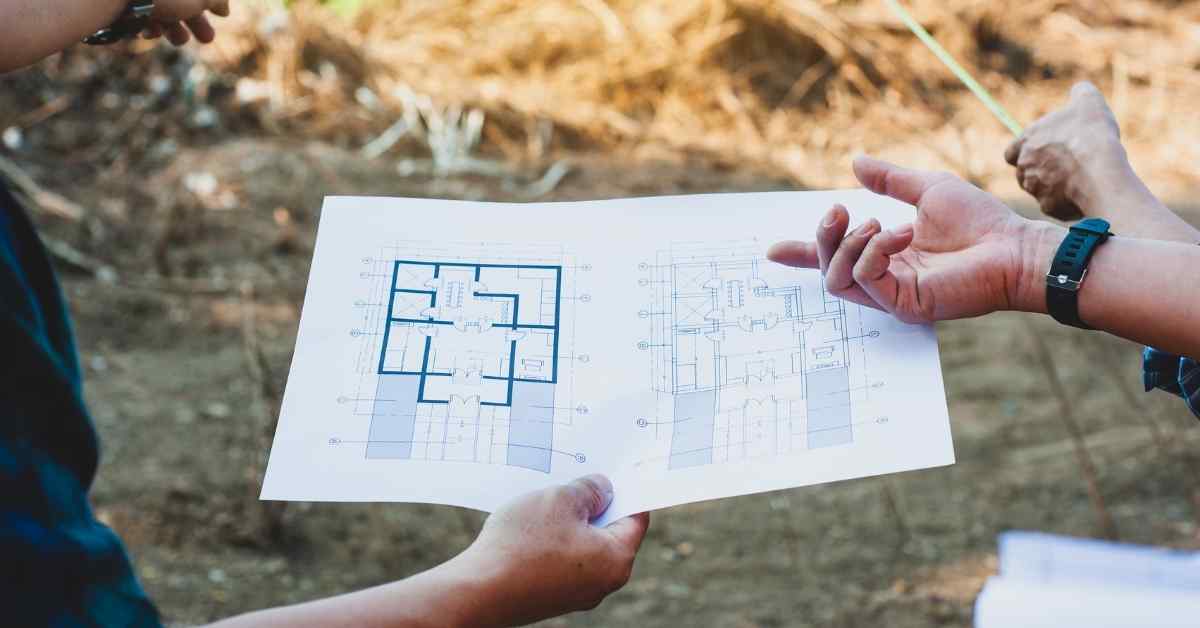
If you’ve been asked for a site plan by a building department, a contractor, an HOA, or a real estate transaction and you’re not sure where to get one, this guide gives you every option.
I’m Engineer Wasim of Site Plans Online USA. There are four ways to get a site plan of your property. I’ll explain each one, what it costs, how long it takes, and which is right for your specific situation.
Why You Need a Site Plan
Before we get into how to get one, it helps to understand what a site plan actually is and who’s asking for it — because the reason affects which option is best.
A site plan is a scaled, top-view drawing of your property showing lot boundaries, existing structures, and whatever proposed project you’re applying to build or permit.
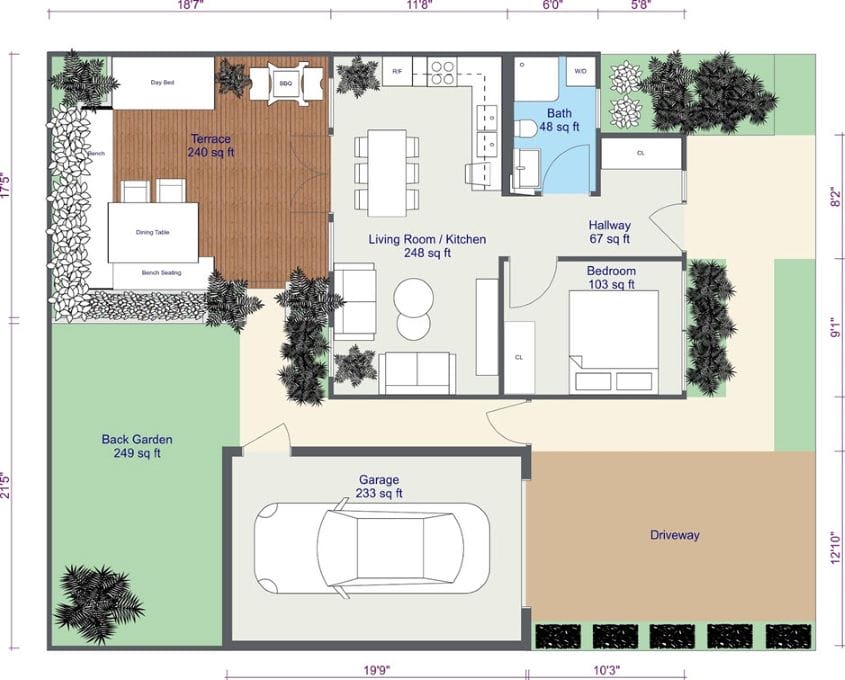
Who asks for site plans and why:
- Building departments — required for permit applications involving exterior work: pools, fences, sheds, decks, additions, ADUs, commercial projects. The building department uses it to verify setback compliance.
- HOAs — some homeowners associations require a site plan showing proposed projects before issuing architectural approval.
- Real estate attorneys and title companies — occasionally required for boundary confirmation in transactions.
- Contractors and designers — use a site plan as the base document for design and construction planning.
The most common situation is a building permit. If that’s your situation, read on — this guide is built specifically for that.
Need a Permit Site Plan?
Get a permit-ready site plan in 12–24 hours — starting from $79. All 50 states. Permit-Focused Drafting.
Option 1: Order from an Online Site Plan Service (Fastest for Permits)
This is the option most homeowners don’t know exists — and once they discover it, it’s almost always the right choice for permit applications.
An online site plan service like Site Plans Online USA prepares your permit site plan remotely, using GIS data, county parcel records, and zoning databases. No site visit needed. You submit your address and project type; you receive a permit-ready PDF within 12–24 hours.
How it works:
- You submit your property address, project type, and any permit comments your building department has given you
- We pull verified GIS parcel data for your address
- We research your county’s zoning code and setback requirements
- We draft the site plan to scale, formatted for your building department’s portal
- You review it, request any changes, and receive the final PDF
Cost: Starts from a flat rate depending on project type. Use our Site Plan Cost Calculator for an instant estimate.
Turnaround: 12–24 hours for most residential projects.
What it includes: GIS-verified property data, county-specific setbacks, all required elements for your permit type, correct formatting for your city’s portal, free revisions if the building department requests corrections.
Best for: Any permit application — pool, fence, shed, deck, addition, ADU, garage, commercial.
Option 2: Hire a Local Drafter or Architect
A local drafting firm or architecture office can prepare a site plan for your property, typically after an in-person consultation and sometimes a site visit.
How it works: You contact a local drafter or architect, describe your project, schedule a consultation, and they prepare the site plan drawings. You review them and they submit or provide files for you to submit.
Cost: Higher than online services. Local firms typically charge by the hour or by project, and their overhead is reflected in pricing.
Turnaround: Typically 1–3 weeks from initial contact to delivery. Some firms are faster; many are slower during busy seasons.
Best for:
- Projects that require a licensed architect’s stamp by code (some commercial, multi-family in certain jurisdictions)
- Complex projects where you want hands-on local consultation
- Full architectural service beyond just a site plan (full permit sets with floor plans, elevations, structural)
Not necessary for: Most standard residential permits. Pool, fence, shed, deck, addition, and ADU permits almost never require a licensed architect for the site plan specifically.
Option 3: Pull an Existing Site Plan from County Records
In some cases, a site plan may already exist for your property from a prior permit. County building departments and planning departments keep permit records — sometimes going back decades.
How to find existing records:
- Go to your county building department’s website
- Look for “permit history,” “permit records,” or “parcel search”
- Enter your property address or parcel ID (APN/folio number)
- Review past permit applications — many include site plans on file
County assessor GIS maps: Your county assessor or property appraiser website typically has a GIS portal where you can view your parcel boundaries, lot dimensions, and sometimes even existing structure footprints. This isn’t a permit-ready site plan, but it gives you accurate property data.
Important limitation: A site plan from a previous permit may be outdated if structures have been added, removed, or modified since. Building departments require the plan to reflect current conditions. An old site plan may be a useful starting point, but it typically needs to be updated for a new permit.
Option 4: Draw It Yourself (DIY)
Yes, you can draw your own site plan — and for very simple projects in jurisdictions with minimal requirements, it sometimes works.
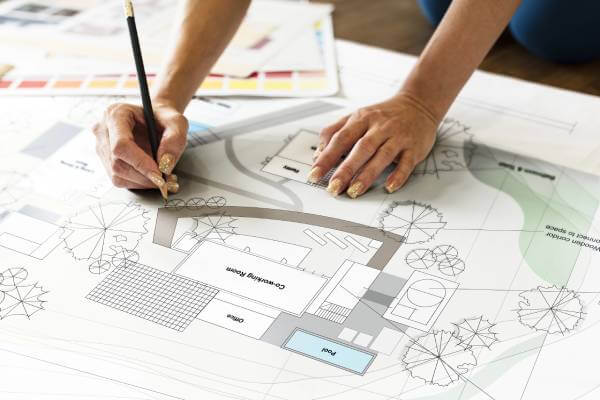
What DIY requires:
- Your exact lot dimensions (from a survey, deed, or county GIS)
- Knowledge of your zoning setback requirements (found in the city’s zoning code)
- Drawing the plan to a consistent scale (1″=20′ is standard for residential)
- Including all required elements: north arrow, graphic scale bar, all structures, all setbacks labeled, title block, impervious surface calculation
- Correct file format for digital submission
The problem with DIY: The most common outcome is a correction notice on the first submission. Not because homeowners aren’t capable — but because building departments have specific requirements that aren’t obvious without experience, and a single missing element (an unlabeled setback, a missing existing structure, an incorrect pool barrier height) sends the plan back.
A correction notice means delay. And the delay — contractor rescheduling, permit timeline extension — usually costs more than the professional plan would have.
Read the honest comparison: DIY vs Professional Site Plan
When DIY is worth attempting:
- Very simple project (straight fence line on a rectangular lot)
- Jurisdiction with minimal requirements
- You have the time to research your local requirements thoroughly
- No contractor schedule depending on the permit
Which Option Is Right for You?
| Situation | Best Option |
|---|---|
| Need a permit for pool, fence, shed, deck, addition, ADU | Online service (Option 1) |
| Need a permit and want hands-on local help | Local drafter (Option 2) |
| Want to check if a plan already exists | County records search (Option 3) |
| Simple project, plenty of time, no contractor deadline | DIY (Option 4) |
| Commercial project, full permit set needed | Online service + PE stamp or local firm |
| Real estate transaction needing boundary confirmation | Licensed surveyor (not a site plan service) |
What Information Do You Need Ready?
Regardless of which option you choose, having this information ready speeds things up:
Required:
- Your property address (full address including city and state)
- Project type — what are you building or changing?
Helpful:
- Your county or city and the building department’s name
- Any permit comments you’ve received
- Survey or plat map if you have one
- Approximate dimensions of the proposed project
- Photos of the property if unusual site conditions exist
Getting a Site Plan in All 50 States
Site Plans Online USA prepares permit site plans for all 50 US states. We have deep knowledge of Florida and California permit requirements, and we research specific requirements for every other state and municipality for each order.
For Florida permits: Site Plans FL — our Florida-specific brand with county-level data for all 67 Florida counties.
For California: California Site Plan Guide
How Fast Do You Need It?
If your permit deadline is close or your contractor is scheduled, speed matters. Our standard residential site plans are delivered within 12 hours to 24 hours. Rush options are available for urgent deadlines.
Read: How Long Does a Site Plan Take Online? and Fast Site Plans — 12–24 Hour Turnaround
Frequently Asked Questions
Can I get a copy of my property’s site plan from my local government?
Sometimes. If a permit was pulled on your property in the past, the building department may have a site plan on file. Check your county building department’s permit records portal using your address or parcel number. These records are often available online.
Do I need a survey to get a site plan?
No — for most residential permits. We use GIS parcel data and county records to establish your property boundaries. If you have an existing survey, we incorporate it. For most residential permit applications, a licensed survey is not required. Read more: Site Plan vs Survey
How much does a site plan cost?
Depends on project type. Use our Cost Calculator for an instant estimate. See our Packages page for what’s included.
My permit was rejected — what do I do?
Use our Permit Rejection Analyzer to identify what needs to be fixed, then contact us. We fix rejected plans within 12 hours.
Take the Next Step With Confidence
Avoid unnecessary delays and prepare for your permit application with greater confidence. Use our free tools to review your project and understand the next steps before moving forward.
ADU Feasibility Checker
Check whether your property may be suitable for an accessory dwelling unit.
Check ADU Feasibility 02Site Plan Checker
Review your drawing for common missing details and potential submission issues.
Review Your Site Plan 03Permit Requirements Checker
Identify the likely permit requirements for your location and project type.
Check Requirements 04Site Plan Cost Calculator
Get a quick site plan cost estimate based on your project requirements.
Calculate Your Cost